Melbourne begins national conversation on the workforce and skills implications of MMC

Following the release in October of the Modern Methods of Construction: Workforce and Skills Implications report, BuildSkills Australia is taking the conversation around Australia through a series of four industry breakfasts.
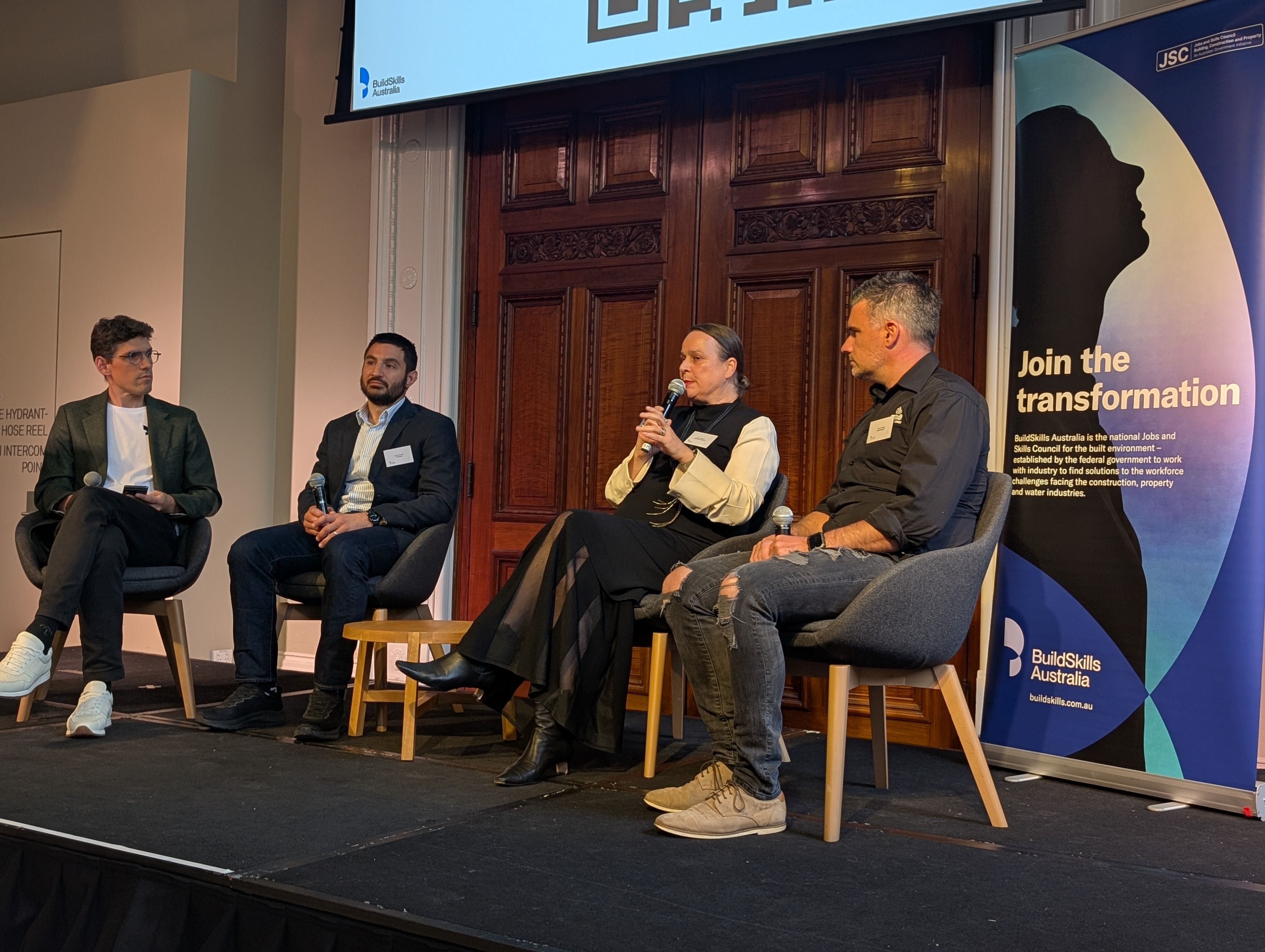
The first event, held in Melbourne today, brought together representatives from industry, government, employers, unions and training providers to explore the report’s findings and consider what greater adoption of MMC could mean for Australia’s workforce and skills system.
The series provides an opportunity to take the findings of the research into conversation with industry and other stakeholders, and to explore what greater adoption of MMC could mean for Australia’s construction workforce, skills system and broader operating environment.
Opening the Melbourne event, BuildSkills Australia CEO Brett Schimming outlined the broader workforce context in which the research was undertaken, including Australia’s future housing and infrastructure requirements and the workforce and productivity factors associated with their delivery.
BuildSkills Australia’s research into MMC considers one aspect of that broader environment, examining how changing construction methods could affect workforce requirements and what this may mean for Australia’s skills and training system.
The research considers how changes in the way buildings are designed, manufactured and assembled could affect workforce requirements and the capabilities Australia will need.
MMC encompasses a range of approaches that shift production from bespoke, site-based fabrication towards more standardised, manufacturing-led delivery and assembly, enabled by integrated design and digital processes.
Presenting the report’s key findings, BuildSkills Australia General Manager, Research and Strategy Dr Robert Sobyra outlined the range of workforce and skills considerations associated with greater adoption of MMC.
The research examines how different approaches to MMC could affect the distribution of skills and activities across design, planning, manufacturing, assembly and project delivery, as well as the potential implications for education and training.
It also considers a number of broader issues associated with the interaction between construction and manufacturing, including occupational boundaries, industrial arrangements, building regulation and compliance.
The Melbourne discussion brought those findings together with practical industry perspectives through a panel featuring Enza Angelucci, Founder and Director of Angelucci Architects; James Briggs, Managing Director of JMB Modular Buildings; and Daniel Noviello, Customer Adoption Manager at Autodesk Informed Design.
A consistent theme throughout the event was that there is no single pathway for MMC. Different approaches will suit different projects, businesses and markets, and any workforce or skills response needs to reflect the conditions in which the industry operates.
For BuildSkills Australia, these conversations are an important extension of the research. They provide an opportunity to test the national findings against industry experience, better understand the opportunities and constraints in different markets, and consider what those differences mean for the skills system.
Following Melbourne, the national breakfast series will continue in Sydney, Perth and Brisbane through to December, providing further opportunities for stakeholders to contribute their perspectives.
Insights from the four events will help inform BuildSkills Australia’s ongoing work with industry, employers, unions, training providers and governments as Australia considers the workforce and skills implications of changing construction methods.
Read the full Modern Methods of Construction: Workforce and Skills Implications report.