

Residential construction mobility study

Residential Construction Mobility Study

Australia’s housing ambitions depend on having enough skilled workers in the right places at the right time.

Unlocking labour mobility will be critical to building the workforce needed to deliver Australia’s housing targets.

Our Residential Construction Mobility Study examines how workers move into, out of and within residential construction - and what can be done to make those movements easier.

Skip to:Key Findings
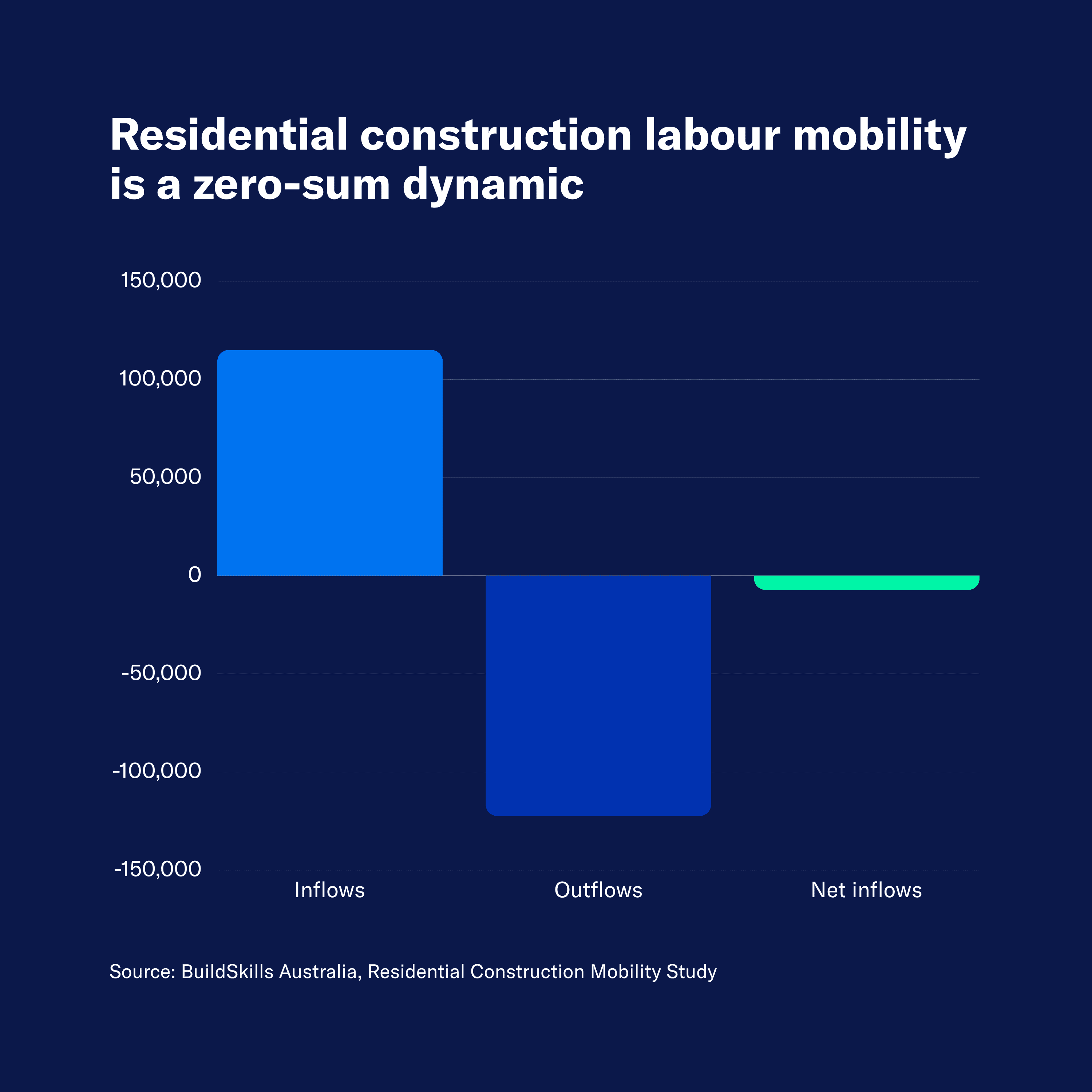
Residential construction labour mobility is a zero sum dynamic
Key findings

More people leave the residential construction sector for other industries than enter from other parts of the economy.

Our report identifies multiple barriers preventing the smooth flow of labour to where it is needed.

Recommendations
Create an accessible online tool to make entry pathways transparent

An accessible, user-centred online tool to make entry pathways clear and navigable. The tool would allow prospective workers to understand licensing and qualification requirements, see how different roles connect across the industry and jurisdictions, and identify the most direct pathways to the jobs they want.

Establish a default fast-track apprenticeship pathway for experienced workers

A genuine, systemwide fast-track option should be the standard route for mature age apprentices who already possess relevant skills and work experience. This pathway would be actively promoted in partnership with industry to ensure prospective workers are aware of the job opportunities available.

Upgrade experienced workers into qualified workers

A nationally consistent framework and approach to assessing the skills of experienced workers and identify targeted gap training needed to achieve recognised qualifications. This would allow workers with relevant industry experience to formalise their skills more quickly and expand the pool of qualified tradespeople available to the residential construction sector.

Learn More